

In 1994, a small studio, Bungie, released Marathon, a Doom-like first person shooter (FPS) which, while familiar in gameplay, innovated the genre’s storytelling through its narrative—entirely told through text terminals in levels. After the Marathon trilogy was complete with Marathon 2: Durandal in 1995 and Marathon Infinity in 1996, after Bungie’s iconic Halo trilogy, and the release of both Destiny titles, the studio returned to their first hit 32 years later with a game that feels so distant, yet ever familiar.
In 2023, Bungie unveiled the distant sequel of the original trilogy, an extraction shooter set 99 years after the original game which would explore the aftermath of the (chaotic and very confusing) events of the trilogy. Marathon, upon its 2023 unveiling, was met with mixed reception. The game’s aesthetic grabbed players’ attention immediately and the continuation of the classic trilogy’s narrative intrigued old fans. The choice to make it an extraction shooter, however, left people skeptical about the direction the game was going.
Marathon had a rough development cycle, to say the least. From significant shifts in leadership and gameplay direction to a plagiarism controversy regarding stolen decals found in the game’s alpha (which was resolved in December to the artist, Fern “Antireal” Hook’s satisfaction and her inclusion in the development and game’s credits), the game had a hard time grabbing gamers’ trust and attention. Through development insights, cinematics showing off the game’s factions and characters, and an open beta in late Febuary—however—the game found its footing with a decently large core playerbase.

Extraction shooters are a mix of battle royale, roguelike, and survival mechanics. Players spawn on a battle royale-esque map and scavenge items and gear throughout the world, with the main end goal simply being to get the hell out of there (with enough loot to make a profit and be able to go into future runs fully equipped). If the player extracts, they sell the items and keep the equipment, able to take them into future runs. If the player dies, they lose everything they collected and/or brought into the match. Escape From Tarkov is probably the most iconic and long-standing title in the genre, alongside Embark Studio’s Arc Raiders which released in 2025 to critical and audience acclaim as a more casual entry into the typically hardcore genre.
Marathon follows the traditional extraction shooter format, with a twist in two systems. Other extraction shooter systems remain consistent: the contract system, the game’s version of quests, the loot system; etc, are all familiar to the genre. The characters in Marathon, referred to as Runner Shells, are one of the two as they act more like heroes in a hero shooter rather than a blank slate for the player, with 3 abilities and passive traits to assist players in looting, movement, and combat.
In terms of the moment-to-moment gameplay loop of Marathon, it’s what people who’ve played a Bungie game will expect. The movement is smooth, but with a bit of weight. The gunplay is snappy and punchy; every gun feels powerful due to the sound design and visual weight that every shot is given. The general feel is a blend of “Destiny 2” and “Apex Legends,” with a bit of “Halo” DNA in there too. The general weightiness, however, is really what brings the gameplay loop together. It’s a seemingly small ingredient, but it slows the game down just enough to make fights more methodical—more based on positioning, shooting skill, and strategy—rather than hyper-fast twitchy movement or whoever has the fastest reflexes.
Like other extraction shooters, there are two significant challenges in Marathon: enemy players and enemy AI. Enemy players are self explanatory, they’re other runners who are also competing to complete contracts, get loot, and exfil. You can fight them or team up to clear enemy AI together, but most players will likely choose to fight. The enemy AI take the form of the UESC (the authoritarian, Sol System-based space government which controls the abandoned colony on Tau Ceti IV) robots. The enemies range in difficulty to kill, going from low-level AI to high-level bosses with tanky health pools, shields, invisibility, and more, but all of them pack a serious punch and show up in increasingly large numbers in the game’s late-game maps.
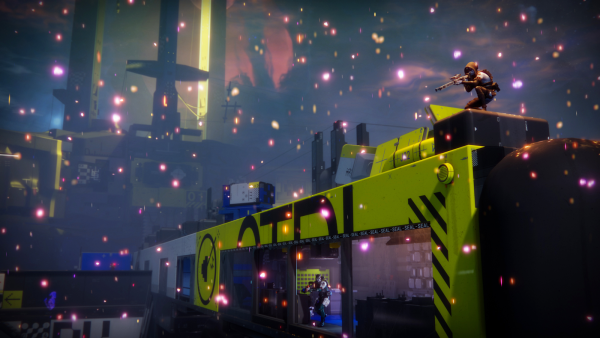
Marathon has four maps as of writing. The maps currently in the game, to summarize, are all great. The first zone, Perimeter, does a great job of introducing players to the game with a mix of mid and close-range-oriented zones and lighter enemy AI density. The second zone, Dire Marsh, orients itself more towards hardcore playstyles. Large, open areas and extensive fog across the map make long-range encounters and ambushes a preferable playstyle, and tougher enemy AI are present in important locations. The two endgame maps, Outpost, and the Cryo Archive aboard the UESC Marathon colony ship, are by far the best and the hardest. Enemy density is high, unlockable areas can be found around the map, and indoors areas are tight, leading to close-quarters encounters further encouraged by the environmental hazard which, when it goes off, forces players into buildings to avoid taking damage. The Cryo Archive, unlocked via a community ARG (alternate reality game) is the real star map. Close quarters environments intensify every encounter, enemy AI are the toughest in the game, and mechanics similar to a “Destiny” raid are present with a proper boss fight in the final unlockable zone. It’s a super innovative map for the genre, and blends the best of Bungie’s PvE and PvP design philosophies.
Marathon’s other break from other extraction shooters is in the storytelling. The original Marathon told its story entirely through terminals in levels where the game’s characters, the AI aboard the UESC Marathon colony ship, communicated with you. The true main character of the original Marathon, the ship AI Durandal, is still iconic to this day for his philosophical ramblings and superiority complex as he essentially goes through AI insanity (known as Rampancy) trying to escape the inevitable death of the universe (hence, “Escape will make me god.”). The storytelling in the 2026 Marathon is essentially no different than its 30 year old predecessors. The story is told through three means: Contracts have you complete quests for factions to gain insight into their operations, the events that led to the colonists on Tau-Ceti IV disappearing, and what the UESC is doing on the colony now through dialogue from each faction’s representative. The Codex entries, gained by completing challenges and extracting with certain items, give insight into the world, and side characters, and the immediate aftermath of the original trilogy. The environmental storytelling of Marathon is key as well—The eerily clean, abandoned facilities on Tau Ceti IV give a unique horror vibe, and terminals are scattered around parts of the maps that have dialogue from a familiar face to the series.
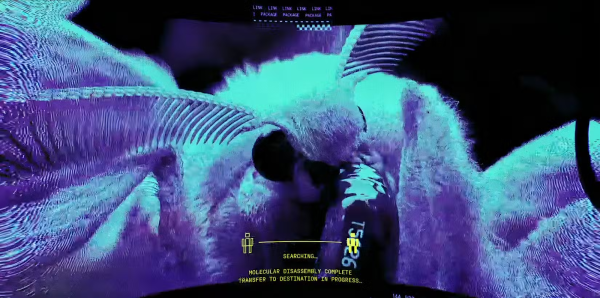
The moment-to-moment gameplay of Marathon is near perfect, yet it somehow isn’t the main draw of the game: That goes to the aesthetics. Visually, Marathon is stunning. The art style, what Bungie referred to as “graphic realism,” takes inspiration from anime like “Ghost in the Shell,” games like “Mirror’s Edge” and real life styles like those found in winter sports gear or the Designers Republic graphic design studio. Neon and saturated colors fill the world, contrasting the natural life of Tau Ceti IV; round, simple, rectangular and circular shapes make up much of the architecture; and the technology and Runners blend retrofuturism, blocky shape language, and cyberpunk influences. The uncomfortable sterile white, greens, and purples of Sekiguchi genetics (the company who makes the Runner Shells); The grafitti-esque, wild visuals of the revolutionary group MIDA; the red and black Japanese-esque visuals of the death cult Arachne, and more, set the factions of Marathon apart quite a lot, yet none feel out of place in the world. The art style isn’t a new one; it’s several decades old, yet it feels so distinct and focused for a game, especially in a market that often feels so visually incohesive, nowadays. Beyond the art style, Bungie kills it with their environments as usual. The grandiose skyboxes, the deep saturated lighting, and more, create standout worlds that feel all the more immersive and aesthetically pleasing.
I’d be remiss to mention the audio of Marathon as well, when it comes to the aesthetics. For one, the soundtrack is excellent. The music plays a lot with heavy, bass-y synths that are perfected with almost-creepy, digitized voice hits that often acts as their own instrument in the music, especially present in tracks like “Code Race,” the game’s main theme. The music, despite often featuring very similar instrumentation and motifs, ranges heavily from ethereal and creepy songs to intense combat tracks. Beyond the music, the overall sound design of Marathon does its job incredibly. Player and AI footsteps are heavy and clearly audible, environmental sounds often fill the air in ambient moments, and the loud, powerful sounds of guns and explosives make for tense, ear-piercing combat encounters.
No game is without its flaws, however. Marathon’s comes in the form of its menus and UI. Bungie games, since “Destiny,” have never had excellent UIs, neither have other extraction shooters, but Marathon primarily suffers from readability and navigation issues. Console players reported issues navigating the menus, and players on all platforms noted problems with things like item readability for consumables.
Marathon is not perfect: its navigational UIs are rough, and Bungie’s dirty monetization practices are still here (though not super impactful as they’re only cosmetics). The package, however, comes together exceptionally well. The gameplay feels great, the maps are wonderful, and the aesthetics are jaw-dropping. It won’t be a game for everyone, that’s just the nature of extraction shooters, but it fills a nice middle ground between the casual gameplay of “Arc Raiders” and the tactical brutality of “Escape from Tarkov.” It’s a slow burn, but one that’s really worth it when you get into it, especially with the decent $40 price tag . Marathon is a pretty strong 9/10 as of now, even if the quality of the game’s live service remains to be seen.
The best way I can put my feelings on Marathon is that I’d say I’m about average at the game. I die a lot, often over and over—yet every time, I want to go right back in.