
(Minor spoilers for seasons four and five of “The Boys” ahead)
“Saturday Night Live” opens. It’s usually a political skit, typically featuring one of their popular political parodies: Donald Trump, Pete Hegseth, Karoline Leavitt, etc. These cold opens often feature the same jokes about these people, the current headlines, etc (Their other skits suffer from this too, but it’s most visible in the cold opens). These skits are an attempt at satire—they have all the looks of it—but they don’t work because there’s nothing substantive about them. They read off the most recent news or shout buzzwords in attempted mockery, but they don’t actually say anything. “Saturday Night Live” hasn’t been funny for a while; it’s very hit or miss, but it’s never been more obvious than in their attempts at politics.
This isn’t just “Saturday Night Live,” however: It’s a hallmark of a lot of modern ‘political commentary’ in media. Shows, films, and games present faux-politics: they claim to have real critiques, to “speak truth to power,” but there’s often nothing real there. They rattle off the headlines, they point to specific laughable individuals as the root of issues, they present exaggerated caricatures, and it means nothing at the end of the day.
You turn on an episode, particularly seasons four and five, of “The Boys”, Amazon and Eric Kripke’s superhero comedy show based on Garth Ennis’ comic run. For basic context, the show follows two parties: Vought, the entertainment-defense-pharmaceutical corporation—and by season five, the de facto government—led by Homelander and other superheroes (referred to as “supes”), and The Boys, a small group of rebel vigilantes with personal vendettas against Vought. The show’s plot points often feel awfully familiar to our politics—in season four, during a dinner party with supes and politicians alike, Homelander rattles off lines about “transgender surgeries on illegal aliens in prison,” and the like. It’s ultimately just a list of right-wing buz
zwords (that would go on to be said, nearly word for word, in a 2024 presidential debate). In season five, episode three, Eric Kripke almost seems prescient: Homelander receives a “vision” of an angel and begins a propaganda push claiming he is god. Only days before episode three aired, Donald Trump posted an AI image of himself healing someone as Jesus. In episode five, Vought begins making “Homelander bibles,” something Trump himself practically did in 2024 endorsing the “God Bless the U.S.A. Bible”, which came to be known as the Trump Bible. One of Homelander’s allies, the supe Firecracker, is an obvious parallel to figures like Marjorie Taylor Greene or Lauren Boebert, and hosts her own Alex Jones-esque show shouting generic Fox News headlines about abortion, immigrants, queer people, and other topics of right-wing fervor. Both seasons four and five were written before their respective events (2024 campaign season and the current administration), something Kripke himself was shocked about, but they end up capturing a feeling of prescience. Maybe it’s the outlandishness of our modern political landscape, or, more likely, it’s the sheer volume of the same satire over and over that eventually just lands right back in our world – or a bit of both.
“The Boys” has always been on the nose—it’s always been a political commentary, and certain characters have always been mirrors for real political figures, or at least popular American political ideas—yet earlier seasons felt like they were about something. Season one presents criticisms of the military-entertainment complex (the relation between the entertainment industry and the military), propaganda, celebrities, and post-9/11 America. Season two took that and focused on the modern propaganda machine: the internet, memes, internet virality, etc. “The Boys” has never had the best, most poignant commentary, but there was something real and distinct.
In season four and onwards, the show seemed to lose all semblance of political commentary. It’s still political, but its humor begins to focus on shouting buzzwords and Fox News headlines, going “look at how crazy these Republicans supes are!” Homelander, while always Trump-inspired, took more from Bush-era, post-9/11 nationalism (Homelander) and integrated various Trump’s characteristics and moments. By seasons four and five, he’s practically a 1-1 parody of Donald Trump. His individual character often feels practically gone, replaced with lazy, poorly-written satire. Homelander’s descent into madness is tracked quite clearly through the show. It’s one of the better parts, in fact, aided by Antony Starr’s performance, but what he descends into isn’t interesting. Starr, in fact, said that he had to push Kripke back on some of the Homelander’s overtly Trumpian characteristics during filming. The issue is not that Homelander descends into madness and goes mask off, not even that he becomes allegorical to Trump, but him doing Trump-esque politics, being told by his advisors that he needs to ban abortion or (other republican policy here), etc, isn’t an interesting ending to a previously compelling arc because that character that he had is now lost .
“The Boys” claims that it’s saying something real about modern American politics, as showrunner Eric Kripke has said himself regarding the show’s parallels to real life. In the same article, he even points out everything the show’s had thematically—social media, modern authoritarian propaganda, etc—in its early seasons. Those themes are all lost now, because the show leaned dangerously far into its real-world comparisons. Rather than tell a new story using our politics to speak to modern fascism, it simply retells ours in the least interesting, most unimaginative way possible. It isn’t saying anything. It points at these figures and tells you to laugh at how silly and stupid they are, but it offers no real substance—no examination of systems, very little look at how this authoritarianism truly affects people. The villains are, well, super. They’re treated as unique, individual evils. They’re the issues, rather than a symptom of it. Even the people are politically divided into “Hometeamers” and “Starlighters” (clearly allegorical for Republicans and Democrats), but the labels are simply vague abstractions, and the individuals that make up these two groups are rarely examined. Only a few times are they shown as real, unique characters, but there should be more of that! A good examination of fascism should show more than the people at the top! The Boys, past a few moments in the first episodes of season five, rarely examines what it’s like under Homelander’s fascism; it only shows the people in power and the few fighting it standing in rooms talking about their plans.
This phenomenon is ultimately a result of a few things, either/or: simply, poor writing—an ability to recognize issues but not examine the why and how in any real detail; a lack of true political thought beyond individual evils. And, possibly: corporate mandates to limit systemic critiques. After all, as they say, capitalism subsumes all critiques of itself.
This is all to say that “The Boys” and media that attempt similar politics to it are practically bordering on being glorified SNL skits. “Headline humor” is my catch-all for this type of satire; “buzzword humor,” alternatively. They, to repeat again, say nothing, despite their claims or best attempts to do so. They aren’t making true political statements; they’re repeating the same, tired jokes with no substance behind them. If you, taking “The Boys” as an example, stripped back the superhero-ness of the characters—their wacky outfits and their powers—you’d essentially just be making a documentary, but not in a compelling way. It’s not pulling back the curtain on our world, but poor set dressing.
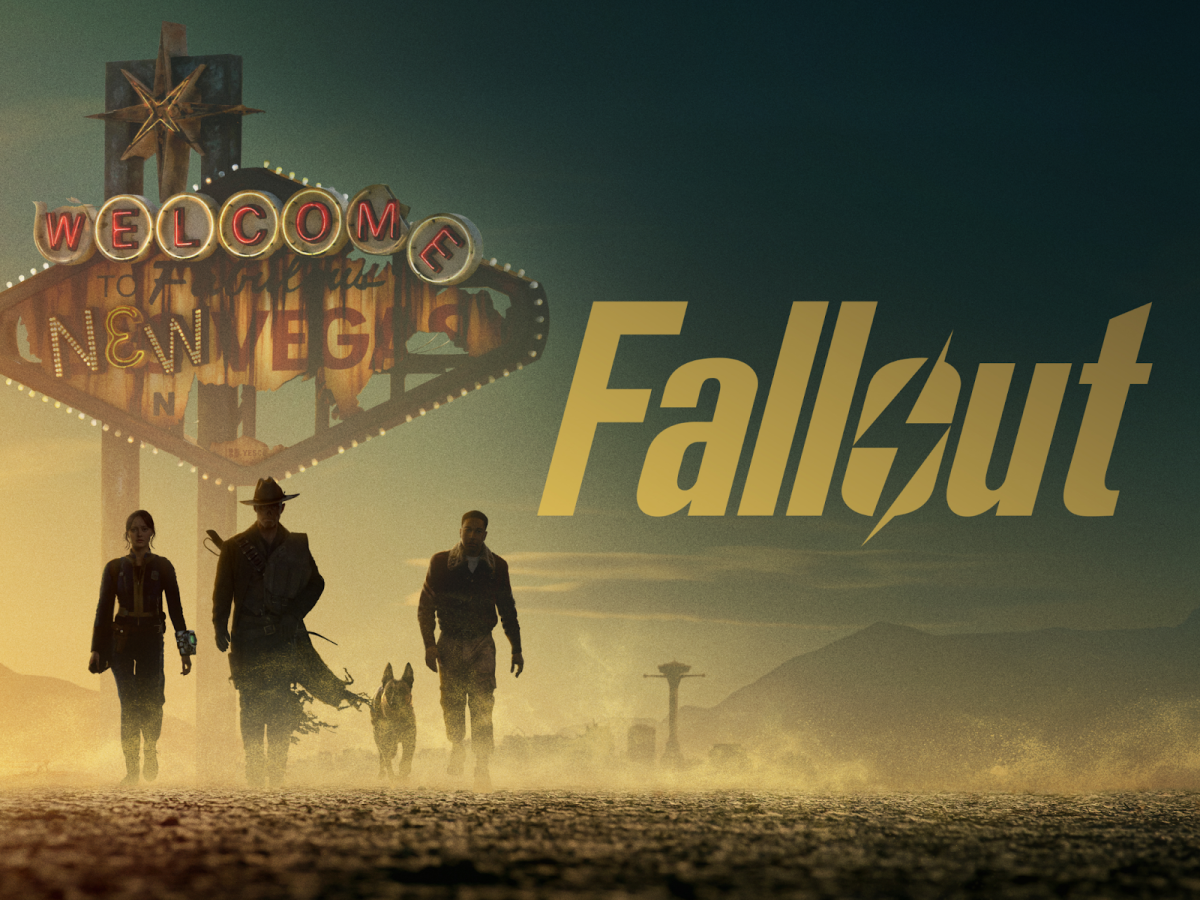
And franchise/genre television has proven it isn’t incapable of saying something. Substantial political media may sometimes be an anomaly, but only months ago, Amazon themselves, who also hold “The Boys,” released season two of “Fallout,” a series which offers pretty substantial critiques of American politics and capitalism. Only a year ago, though also very much an anomaly, Disney—the prime example of capitalist entertainment megaconglomerates—released the final season of “Andor”, an almost uncritically pro-revolution, anti-imperialist examination of the banality of fascism, so maybe the quality of “The Boys”’ politics is a writer problem.
There are things I like about the show (though I also have plenty of other criticisms of it)—it looks good (usually) and, notably, really does have the cast and performances of a lifetime—but I plead for it, and so many other works, to offer something real, something that actually critiques systems and power the real things that occur, not just glorified SNL parodies.